
Annel Regulatory Compliance & Responsible Person services in the UK, EU & USA. Ensure safety, meet legal standards & expand globally with Annel!
Cosmetic products compliance consultants.
Colour Cosmetics Labelling in the EU: Shade Variants, CI (+/−) and Palette Compliance
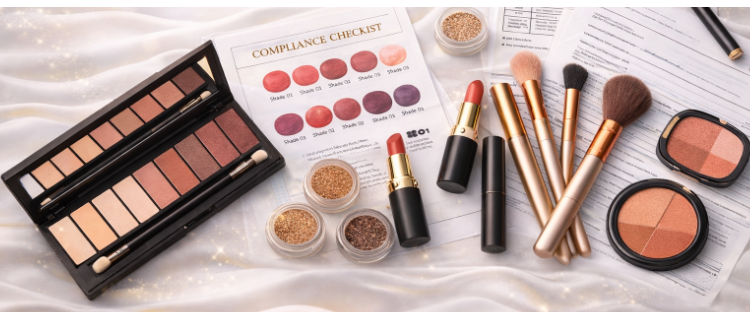
Colour cosmetics labelling in the EU: shades, CI (+/-), palettes and supply chain accountability
In colour cosmetics (lipsticks, mascaras, eyeshadows, pencils, blushers, bronzers, highlighters), labelling issues rarely come from missing basic label elements. The main risk is variant complexity. Many shades, limited print space, and formula differences driven mainly by colourants create operational non compliances. Typical examples include an incorrect CI list for a specific shade, inconsistent shade naming across SKUs and listings, or uncontrolled label edits that result in a new version of product information.
This article does not repeat a generic what must be on the label checklist. If you need baseline rules for limited print space, including practical routes for miniatures and very small packs, start with how to label small cosmetic products or samples (EU/UK). For cross category patterns, see the most common cosmetic labelling mistakes.
EU labelling obligations are set out in Regulation (EC) No 1223/2009, including Article 19. You can review the legal text on EUR Lex.
1) A shade is not marketing. It is variant identification and traceability evidence
In colour cosmetics, “Shade 03”, “Warm Nude” or “Cherry 12” cannot be only a commercial name. It must enable unambiguous variant identification for complaints, undesirable effects reporting, authority requests, and matching the unit in hand to the correct documentation.
A common failure looks like this. The shade name is printed on pack, but in internal systems such as SKU records, listings, proofs, and documentation, the same variant exists under a different code or name. The label may look fine, but variant traceability is not defensible operationally.
Because variant traceability is a supply chain accountability issue, it typically sits alongside RP scope and controls. For a compliance led view of Responsible Person responsibilities and controls, see Responsible Person requirements and scope.
Variant control matrix example
A practical way to prevent CI and shade mismatches is to keep a controlled internal matrix linking each marketing shade name to the internal Shade ID, formula code, and safety documentation reference.
| Marketing Shade Name | Internal SKU / Shade ID | Formulation Code (Base + Pigment) | CPSR / Safety Report Ref. | Application Area Compliance (EU) | Specific CI Additions (beyond +/- list) |
|---|---|---|---|---|---|
| Example: “Velvet Rose” | SKU-LIP-004 | LP-2024-V2 | CPSR-2024-08 | Lips (EU) | CI 45410 (Red 27) |
| Example: “Midnight Blue” | SKU-EYE-012 | ES-2024-B1 | CPSR-2024-11 | Eye area only (EU) | CI 77510 (Ferric Ferrocyanide) |
| Your shade here |
2) INCI and CI (+/-): where colour cosmetics fail most often
In many colour cosmetics, the base formula is stable while pigments and colourants change. That creates two typical risks. A variant carries an incorrect CI list because the shade assignment is wrong. The (+/-) approach is treated as a safety net rather than a controlled declaration aligned with real formulas.
The “May contain (+/-)” approach can be operationally justified with many shades, but it is not a blanket shield. CI declarations must remain consistent with real formulas and the intended use area. CI control should sit within broader compliance oversight. If your portfolio has high variant complexity and CI copy and paste risk is real, the context in cosmetic ingredients compliance (2026) is relevant.
Function pictograms on small packs
Colour cosmetics often rely on very small packs. When the product function is not obvious from presentation, brands may use simple pictograms to indicate function or application area. Pictograms are not standardised EU legal symbols. They support clarity only if the meaning is unambiguous and aligned with the Responsible Person decision and the actual use area.
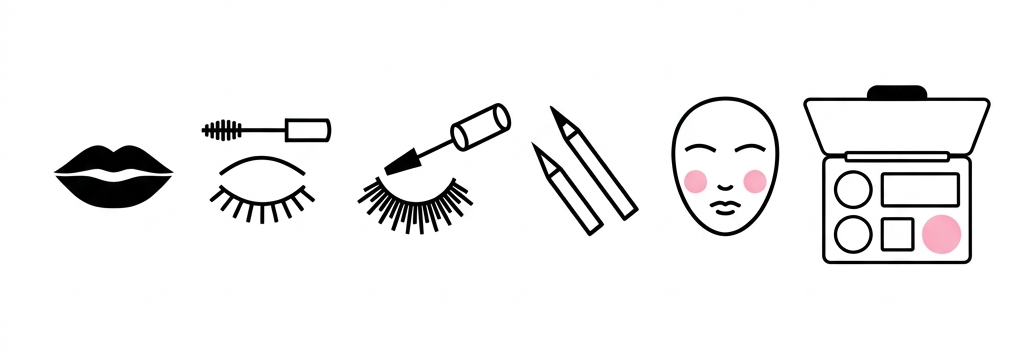
If pictograms are used, apply the same meaning consistently across the range, and avoid pictograms that imply a different use area than the product is intended for.
Label and Shade Variant Compliance Check
If you have many shades and cannot risk CI (+/-) errors or variant inconsistencies between proofs and documentation, commission a Label and Shade Variant Compliance Check. We review your shade matrix, CI and INCI declarations, and variant identifiers before print approval.
3) Palettes, multi pan products and kits: multiple compositions, one accountability in the market
Eyeshadow palettes, 2 in 1 compacts, mini sets, and multi segment products carry higher risk because individual parts may have different compositions. Consumer information must allow the correct assignment of composition to the correct element.
This is not an aesthetic packaging topic. It is about evidence, traceability, and being able to identify the relevant segment in a complaint or an inspection. If you are using multi layer solutions such as booklet or peel off labels, or moving information off the primary pack, treat it as a compliance decision and use approaches that work in real market conditions. A practical reference point is peel off vs booklet multi layer packaging strategy.
4) Limited print space in colour cosmetics: one criterion matters most
Small packs are the norm in colour cosmetics, such as sticks, mini mascaras, and small compacts. That does not mean fewer obligations. It means structuring information carriers so the product remains compliant in the market. The full rules for small formats and off pack solutions are covered in how to label small cosmetic products or samples.
For colour cosmetics, one criterion is non negotiable. The variant, meaning the shade, must remain identifiable in the market, even if some information is moved to outer packaging or multi layer solutions.
5) Supply chain edits and handling: where operational changes create legal exposure
In practice, colour cosmetics non compliances often appear when label content is edited during distribution handling, especially where changes affect meaning, such as function, precautions, or implied properties. Risk also increases when shade and CI alignment is broken by operational workarounds.
The most defensible approach is to treat label content control as part of a compliance system, with version control, approvals, and a defined scope of allowed changes. If you want a compliance led structure that supports this across the market, start with Responsible Person services.
6) Shade variant compliance review: what is assessed
With many shades, colour cosmetics labelling control is not reading one label. It is a structured review of the consistency between your shade matrix, label proofs, CI and INCI declarations, and the way each variant is identified in real market distribution.
A shade variant compliance review typically assesses variant identification using a Shade ID kept consistent across artwork, SKU, listings, and documentation; CI (+/-) alignment with the specific shade and intended use area; palettes and kits where information must be assignable to elements with different compositions; and durability marking plus batch identification that remain usable in real handling.
Ongoing oversight and accountability model
If you place colour cosmetics on the EU market and need confidence that shades and variants are consistent, identifiable, and defensible in an inspection, commission compliance work without pushing accountability onto designers or marketplace teams.