
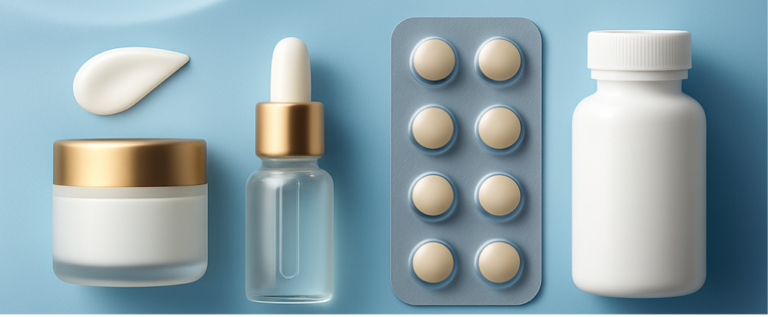
Cosmetic or Medicinal Product? Where Skincare Claims Cross the Regulatory Line?
In cosmetic compliance, the line between a beauty product and a medicinal product is often narrower than many brands expect. Crossing that line is not a creative win. It is a regulatory risk with commercial consequences: delayed launch, label rework, product withdrawal, enforcement exposure, and unnecessary cost at a stage where the business expects acceleration, not correction.
In the EU, cosmetics are governed by Regulation (EC) No 1223/2009. In the US, FDA distinguishes cosmetics from drugs primarily through intended use. In Great Britain, MHRA assesses borderline products case by case and determines whether a product falls within the medicinal framework.
That is why borderline assessment should not be treated as a late legal check. For serious Regulatory Affairs teams, it sits much earlier in the decision chain: before claims are approved, before artwork is frozen, and before a market-entry plan is presented as commercially ready. For brands operating across multiple markets, that discussion should sit alongside cosmetic regulatory compliance planning, ingredient risk assessment and pre-print compliance review.
1. Classification is rarely decided by formula alone
In the US, FDA explains that intended use may be established through product claims, advertising, website wording, consumer perception, and ingredients that have a well-known therapeutic use. FDA also makes clear that some products can be both a cosmetic and a drug, depending on the uses claimed for them.
In the EU, the legal starting point is different but equally strict. A cosmetic product is defined by both where it is applied and what purpose it serves: cleansing, perfuming, changing appearance, protecting, keeping in good condition, or correcting body odours. This is why the same formulation may look commercially attractive in two different campaigns, yet create very different regulatory exposure depending on the promised effect.
A useful internal reference point here is what qualifies as a cosmetic product.
In Great Britain, MHRA’s approach reinforces the same strategic lesson: borderline status is assessed in context, not in isolation. A product may therefore appear cosmetic in formulation terms while still raising medicinal-borderline concerns because of its presentation, intended purpose, or promotional framing.
2. The real risk is usually not the formula. It is the claim
Most borderline problems begin not in the lab, but in the language. Once communication shifts from appearance, maintenance, or comfort into disease treatment, prevention, or the restoration, correction, or modification of a physiological function, the regulatory analysis changes materially.
Under EU law, this is also where Article 20 becomes commercially important. Cosmetic products cannot be presented with text, names, trade marks, pictures or other signs that imply characteristics or functions they do not have. For RA, that means claims review cannot be separated from pack review, substantiation review, or digital-content review. The regulatory meaning of a product is built cumulatively.
A practical way to explain this internally is to distinguish lower-risk appearance-led wording from higher-risk therapeutic or structure/function wording. The comparison below is an editorial simplification based on how regulators distinguish cosmetic presentation from drug or medicinal presentation; it is not a substitute for market-specific legal review.
| Lower-risk cosmetic framing | Higher-risk medicinal / drug framing |
|---|---|
| improves the appearance of uneven skin | treats a skin condition |
| helps skin look smoother | stimulates collagen production |
| reduces the visible appearance of fine lines | removes wrinkles |
| supports skin comfort | reduces inflammation |
| helps keep skin in good condition | restores physiological function |
This comparison is a practical editorial filter, not a substitute for market-specific legal review.
3. “Cosmeceutical” and “medical grade” do not solve the issue
From a regulatory perspective, hybrid marketing language does not create a safer category. A product may be a cosmetic, a drug, or a combination of both, but not a third category invented by positioning language.
The same strategic caution applies to phrases such as “medical grade skincare.” Even where the commercial intention is premium positioning, such wording may imply therapeutic status, medicinal efficacy, or a level of authority-backed validation that the product does not legally have. In borderline work, presentation matters. That is why claims, visuals, and brand framing should be reviewed together with Responsible Person support and broader regulatory compliance planning before launch.
4. A brief example of how wording changes exposure
Consider an eye cream with peptides. A marketing-led claim such as “eliminates wrinkles by stimulating collagen production” points toward a physiological effect and increases borderline risk. A safer cosmetic direction would be “helps reduce the visible appearance of fine lines and leaves skin looking smoother.”
The formula may be identical. The commercial story is not. That distinction is exactly why claims review should happen before final artwork and campaign sign-off.
5. Evidence matters — but only when it matches the final claim
In the EU, the Product Information File must contain, where justified by the nature or effect of the cosmetic product, evidence supporting the claimed effect. The regulatory question is not whether some supporting data exists somewhere in the background. The real question is whether the evidence meaningfully supports the final promise attached to the final product.
In the US, MoCRA requires the responsible person to maintain records supporting adequate safety substantiation. It also strengthened the enforcement environment around cosmetic safety and post-market accountability. The strategic implication is clear: the cost of weak substantiation, weak positioning, or weak documentation is higher than it was before.
This is why claims should not rest on ingredient folklore, supplier enthusiasm, or isolated raw-material narratives. If a product is being positioned around efficacy, sensitivity, repair, or high-performance actives, the evidence package needs to support the finished formula, the final wording, and the real conditions of use.
In practice, this is where CPSR-related documentation planning, ingredient risk assessment and pre-print compliance review should connect before launch, not after a problem emerges.
6. Retinoids show why borderline thinking cannot be separated from regulatory change
Commission Regulation (EU) 2024/996 introduced restrictions for Retinol, Retinyl Acetate and Retinyl Palmitate, collectively referred to there as vitamin A. The regulation restricts them to 0.05% RE in body lotion and 0.3% RE in other leave-on and rinse-off products, and it also requires the warning “Contains Vitamin A. Consider your daily intake before use.”
The significance here is broader than retinoids alone. It shows how a familiar cosmetic ingredient can become a regulatory trap when claims strategy, formulation limits, labelling and market timing are treated as separate conversations. If the brand story continues to promise “clinical repair” while the regulatory framework tightens around concentration and warning language, the risk is no longer just technical. It becomes structural.
A sensible supporting reference for this kind of review is ingredient compliance planning across the EU, UK and USA.
7. Why strong RA teams intervene early
The strongest Regulatory Affairs functions do not operate as late-stage word-police. They protect commercial viability by identifying where a product’s legal identity may shift under the pressure of marketing ambition, cross-border expansion, active-led positioning, or evolving ingredient rules. Borderline work is therefore not a technical footnote. It is part of launch strategy, risk containment and brand protection.
For brands entering multiple markets, that early review often needs to sit alongside Responsible Person support, EU/UK compliance support for US brands and a broader regulatory review of claims, labels and documentation.
Final point
The cosmetic–medicinal borderline is rarely decided by one sentence alone. More often, it is the cumulative effect of wording, visuals, intended use, ingredient reputation, promised outcome and market-specific enforcement logic.
That is exactly why the issue should be handled as a strategic regulatory question, not a copy tweak at the end of the process. The brands that manage it best are usually the ones that review it early, while change is still affordable.