
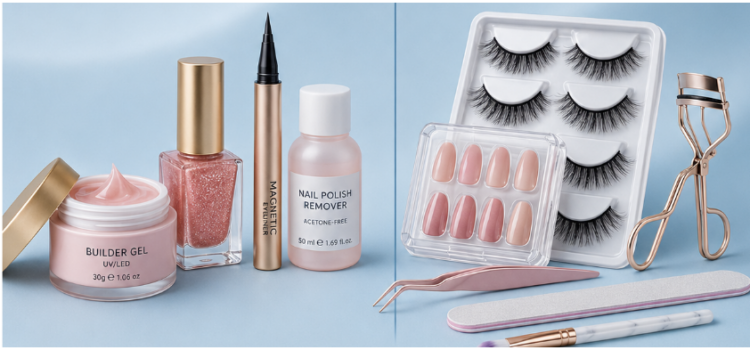
Cosmetic or General Product? False Nails, False Eyelashes and Beauty Accessories
False nails, false eyelashes and beauty accessories often look like simple cosmetic products from a marketing perspective.
Beauty retailers sell these products in beauty aisles, while brands promote them through beauty claims. Consumers use them to enhance appearance and often find them next to make-up, nail polish, mascaras, lash serums or cosmetic kits.
However, from a regulatory perspective, they do not always follow the cosmetic compliance route.
Some products are cosmetics. Others are articles, general products or chemical mixtures. In addition, some kits may contain more than one regulatory category in the same box.
This distinction matters because classification determines the documentation route, labelling obligations, safety assessment, responsible economic operator requirements, import controls and market surveillance risk.
For beauty brands, importers and distributors, the question is not simply: “Is this a beauty product?”
The real question is: “What is the product’s primary function, how is it presented, and which legal framework applies before it enters the EU or UK market?”
For a wider explanation of how the cosmetic product definition works in practice, see Annel’s guide: What Is a Cosmetic Product? And What Definitely Is Not?
1. Why Borderline Classification Matters
Under Regulation (EC) No 1223/2009, a cosmetic product is a substance or mixture intended to contact external parts of the human body, teeth or the mucous membranes of the oral cavity, exclusively or mainly for purposes such as cleaning, perfuming, changing appearance, protecting, keeping in good condition or correcting body odours.
This definition matters because it does not cover every product used in a beauty routine.
A product may contact the body, sit inside a make-up or nail kit, or appear in beauty retail channels. However, it may still fall outside the cosmetic regulation if its main purpose is not cosmetic in the legal sense.
The EU Borderline Manual makes this clear. Brands should assess classification case by case, considering the product’s composition, intended use, mode of action, presentation and claims. The manual does not bind courts or authorities, but it remains a key reference point for competent authorities and regulatory teams when they assess products at the edge of the cosmetic definition.
This is where false nails, false eyelashes, adhesives, magnetic eyeliners and beauty tools become strategically important.
Misclassification may result in:
- Missing CPSR documentation;
- Missing PIF documentation;
- Incorrect labelling;
- Missing GPSR technical documentation;
- Incorrect CLP classification for chemical mixtures;
- Incorrect customs or product classification at import;
- Blocked marketplace listings;
- Product detention, withdrawal or recall;
- Costly artwork and packaging changes after launch.
As a result, this is not only a legal issue. It is a commercial risk.
2. Cosmetic, Article or Chemical Product?
The first regulatory question is whether the product is a substance or mixture, or whether it is an article.
Cosmetic products under Regulation 1223/2009 are substances or mixtures.
By contrast, many beauty accessories are articles. Their function depends mainly on their shape, structure or physical form rather than on a cosmetic formulation.
Examples include:
- false nails;
- false eyelashes;
- nail files;
- nail tips;
- brushes;
- sponges;
- lash curlers;
- tweezers;
- applicators;
- beauty tools.
These products may still improve or support appearance. However, that does not automatically make them cosmetics.
A false nail, for example, changes the appearance of the hand when applied. However, the false nail itself is usually an article. Its function comes from its shape and form. It is not a cosmetic mixture applied to the nail plate.
By contrast, a gel, acrylic or nail polish applied to the nail to create, colour, protect or decorate the nail is more likely to fall within the cosmetic route, provided the product has a cosmetic purpose and does not make medicinal or other non-cosmetic claims.
As a result, this distinction affects the compliance file.
A cosmetic product may need:
- Cosmetic Product Safety Report;
- Product Information File;
- label review;
- notification;
- ingredient compliance assessment;
- Responsible Person review.
An article or general product may instead require:
- GPSR safety documentation;
- traceability information;
- safety instructions;
- warnings;
- supplier controls;
- responsible economic operator information;
- REACH assessment, where relevant.
A chemical adhesive or solvent may also require:
- CLP classification;
- hazard labelling;
- safety data sheet review;
- packaging assessment;
- specific consumer warnings.
In other words, “beauty product” is not a sufficient regulatory classification.
3. False Nails: Not Every Nail Product Is a Cosmetic
False nails and nail tips are usually not cosmetic products as such.
They are articles used to alter the appearance of the nail, but their function comes from their physical form.
However, this does not mean they are unregulated.
Brands should still assess them under the applicable general product safety framework. In the EU, the General Product Safety Regulation has applied since 13 December 2024 and sets a general framework for the safety of consumer non-food products.
For false nails, this means that brands and importers should consider:
- Product safety assessment;
- Foreseeable use and misuse;
- Sharp edges or breakage risk;
- Materials and restrictions relevant to the product;
- Traceability;
- Warnings and instructions;
- Batch or type identification;
- Responsible economic operator obligations;
- Supplier documentation;
- Recall readiness.
However, the regulatory route changes if the product is not a pre-formed false nail but a substance or mixture applied to the nail to create an artificial nail.
The EU Borderline Manual distinguishes between glues used to attach fake nails and substances or mixtures applied to the nails during the process of forming artificial nails. Substances and mixtures used to create artificial nails are likely to fulfil the cosmetic purpose criterion and may therefore be considered cosmetic products.
This is why nail systems need careful review at product level.
A single “nail kit” may contain:
- false nail tips as articles;
- nail glue as an adhesive or chemical mixture;
- gel or acrylic products as cosmetics;
- decorative nail polish as a cosmetic;
- nail file as a general product;
- remover as a cosmetic or chemical product depending on intended use and presentation.
Therefore, one box may trigger more than one compliance route.
4. Nail Glues and Adhesives: The Function Is Critical
Adhesives used to attach false nails or false eyelashes are one of the clearest borderline examples.
The EU Borderline Manual explains that glues or adhesives intended to attach articles such as fake nails or false eyelashes to an external part of the body cannot be considered cosmetic products where their exclusive function is attachment, because they do not have a cosmetic function.
This is a key point.
The consumer places the adhesive in contact with the body, but contact with the body alone is not enough. The product must also have an exclusive or main cosmetic purpose.
If the main purpose is only to fix an article to the body, the product may fall outside the cosmetic route and require assessment under other rules, such as the General Product Safety Regulation, REACH Regulation and CLP Regulation.
This may affect:
- Hazard classification;
- Labelling;
- Safety data sheet requirements;
- Warnings;
- Child safety considerations;
- Packaging information;
- Supplier documentation;
- Marketplace compliance checks.
Cyanoacrylate Warning: A Common Labelling Gap
For nail and lash adhesives, this issue is not theoretical.
Regulatory warning: Many fast-bonding glues are based on cyanoacrylates. Where CLP requirements apply, this can trigger specific labelling obligations, including the EUH202 warning for cyanoacrylate mixtures:
“Cyanoacrylate. Danger. Bonds skin and eyes in seconds. Keep out of the reach of children.”
Importers often miss this warning when they treat the product as a simple cosmetic accessory or rely only on a supplier’s generic “cosmetic product” declaration.
For consumer-facing beauty kits, this can create a serious compliance gap.
The brand may have an attractive lash or nail set, but the adhesive inside the box may need chemical classification, hazard labelling, appropriate warnings and packaging review under the CLP Regulation.
However, the assessment remains case by case.
If a product has a primary cosmetic function by itself, such as changing appearance, and only a secondary function of attaching an article, the classification may be different.
Therefore, brands should assess presentation, claims, formulation and actual use before they finalise the label and artwork.
5. False Eyelashes: Beauty Product Does Not Always Mean Cosmetic Product
False eyelashes are beauty products in the commercial sense, but they are usually articles from a regulatory perspective.
They are not cosmetic substances or mixtures. They do not clean, perfume, protect or keep the skin in good condition by themselves. Their effect comes from their physical form and placement.
As a result, brands should not automatically treat false eyelashes as cosmetic products.
The lash product itself may require general product safety assessment and traceability controls.
The lash adhesive may require chemical classification and labelling assessment.
In addition, any eyeliner, serum, coating or cosmetic mixture sold with the lashes may require a full cosmetic compliance route, including Cosmetic Product Safety Report, Product Information File and cosmetic ingredient compliance review.
This is particularly important for brands selling complete lash kits.
A lash kit may include:
- false lashes as articles;
- lash adhesive as a chemical mixture;
- magnetic eyeliner as a cosmetic;
- applicator tool as a general product;
- instructions and warnings covering the safe use of the complete system.
Therefore, Regulatory Affairs teams should avoid classifying the kit as one simple product.
Regulatory teams should assess each component separately and review the final pack as a complete consumer offer.
6. Magnetic Eyeliners: Why They Can Still Be Cosmetics
Magnetic eyeliners are a useful example of how product function can affect classification.
The EU Borderline Manual states that a coloured magnetic eyeliner can be considered a cosmetic product similar to a non-magnetic eyeliner, because it is applied like eyeliner and its main purpose is to change the appearance of the part of the skin on which it is applied.
The additional function of allowing false eyelashes to attach may be treated as secondary.
Therefore, magnetic functionality does not automatically remove the product from the cosmetic regime.
However, the product still needs careful assessment.
A magnetic eyeliner may require:
- Cosmetic Product Safety Report;
- Product Information File;
- ingredient compliance review;
- label review;
- notification;
- claims assessment;
- assessment of impurities, colourants and restricted substances;
- specific eye-area safety considerations.
The brand should also consider the combined use of the magnetic eyeliner and false lashes.
Even if the eyeliner is a cosmetic product, the lashes themselves remain articles.
As a result, the full product system needs both cosmetic compliance review and general product safety consideration.
For brands launching hybrid beauty systems, magnetic eyeliner is a strong reminder that the main function, secondary function and consumer presentation all matter.
Not sure whether your product is cosmetic, accessory or chemical product?
False nails, false eyelashes, magnetic eyeliners and beauty accessories can trigger very different compliance routes.
A product that looks simple from a marketing perspective may require Cosmetic Product Safety Report documentation, Product Information File preparation, GPSR technical documentation, CLP review or a combination of several compliance checks.
If you are launching a nail, lash or beauty accessory range in the EU or UK, classification should be confirmed before artwork, supplier documentation and marketplace listings are finalised.
7. Beauty Accessories Under GPSR
Beauty accessories are often underestimated from a compliance perspective.
Brushes, sponges, lash curlers, nail files, applicators and similar products may not require CPSR documentation if they are not cosmetics.
However, that does not mean they are documentation-free.
The General Product Safety Regulation applies to consumer non-food products in the EU and creates obligations around product safety, risk analysis, traceability, safety information, recall procedures and economic operator responsibilities.
For beauty accessories, brands and importers should consider:
- whether the product is safe under normal and reasonably foreseeable conditions of use;
- whether the product presents physical, mechanical, chemical or hygiene-related risks;
- whether the product requires warnings or instructions;
- whether the product can be traced by batch, type, serial number or another identifying element;
- whether the manufacturer, importer or responsible economic operator details are correctly provided;
- whether technical documentation is available;
- whether there is a procedure for complaints, incidents, recalls and corrective action.
Therefore, this matters especially for products imported into the EU from outside the Union.
For non-EU brands, the practical question is not only whether the product is safe.
In addition, the question is who in the EU supply chain holds the required responsibility and documentation.
For wider support with EU and UK market access, see Annel’s EU and UK cosmetic compliance support.
8. Mixed Beauty Kits: The Highest Risk Area
The highest risk is often not the individual product, but the mixed kit.
A beauty kit may include both cosmetic and non-cosmetic components.
For example:
- a false nail kit with nail tips, glue, gel polish, nail file and remover;
- a lash kit with false eyelashes, adhesive, applicator and eyeliner;
- a brow kit with cosmetic tint, applicator brush and protective template;
- a make-up accessory set with sponges, brushes and a cleaning solution.
One Commercial Kit, Several Legal Product Types
Each component may fall under a different regulatory route.
Cosmetic components may require CPSR, PIF and notification.
By contrast, general product components may require GPSR documentation and traceability.
In addition, chemical adhesive or solvent components may require CLP classification and safety data sheet review.
The packaging and instructions must explain the use of the full kit without creating misleading or unsafe expectations.
This is why kit-level compliance cannot rely only on a supplier declaration saying “beauty product” or “cosmetic item.”
The regulatory review should identify the classification of each component, the documentation required for each route and the way the final kit is presented to consumers.
This is also relevant for children’s or play-based beauty products. For that related topic, see Annel’s article on the cosmetic-toy borderline.
Suggested Visual: Deconstructing a Lash Kit
False lashes
Regulatory route: Article / general product
Main documentation: GPSR safety assessment, traceability, warnings
Lash adhesive
Regulatory route: Chemical mixture
Main documentation: CLP classification, hazard labelling, SDS review, packaging warnings
Magnetic eyeliner
Regulatory route: Cosmetic product
Main documentation: CPSR, PIF, ingredient compliance, notification, label review
Applicator tool
Regulatory route: General product
Main documentation: GPSR risk assessment, material safety, traceability
Outer retail kit
Regulatory focus: Combined use, consumer instructions, warnings, importer details, consistency of claims
This structure shows why one commercial product may contain several legal product types.
9. Customs and Import Risk: Classification Starts Before the Product Reaches the Shelf
In practice, for imported beauty accessories, classification is not only a regulatory affairs issue.
It can also become a customs and supply chain issue.
False nails, false eyelashes, brushes, sponges, nail tools and lash kits often enter the EU or UK as private label products from third countries. In practice, regulatory friction may occur before the product reaches a warehouse, marketplace or retail shelf.
If an importer declares the product incorrectly, the importer may face questions about:
- Customs classification;
- HS or tariff code;
- Product description;
- Applicable product safety framework;
- Responsible economic operator;
- Chemical classification of adhesives or liquids;
- Safety documentation;
- Labelling and traceability;
- Product category: cosmetic, article, chemical mixture or mixed kit.
The European Commission’s Access2Markets guidance explains that goods imported into the EU must be classified using the appropriate product code, which is used to identify duties and applicable import conditions.
This matters because a supplier’s commercial description is not the same as legal classification.
A box described on a supplier invoice as “cosmetic lash kit” may contain:
- false eyelashes that are articles;
- adhesive that may be a chemical mixture;
- eyeliner that may be a cosmetic product;
- tools that fall under general product safety requirements.
For importers, this can create a gap between customs documentation, product safety documentation and marketplace compliance files.
Early classification helps align the commercial invoice, product description, tariff classification, safety documentation, labelling and market access route.
As a result, brands can reduce the risk of delays, requests for additional documentation, relabelling, product detention or post-import corrective action.
10. Claims Can Change the Risk Profile
Product claims are central to borderline classification.
A false nail, lash adhesive or beauty accessory may create additional regulatory risk if the claims move beyond appearance or safe use and start suggesting therapeutic, antiseptic, antibacterial or corrective effects.
For example, claims such as:
- repairs damaged nails;
- heals inflammation;
- prevents infection;
- antibacterial protection;
- clinical repair;
- treats nail fungus;
- strengthens from within;
- stimulates growth;
- medical-grade treatment;
- professional infection control.
These claims can move the product towards a different regulatory regime, including medicinal, medical device or biocidal product considerations.
This is why claim review should happen before artwork approval, not after launch.
If a brand wants the product to remain within the cosmetic or general product route, its claims, imagery, instructions, website copy and marketplace listing should all support that classification.
For related borderline risks, see Annel’s guides on the cosmetic-medicinal borderline and the cosmetic-biocide borderline.
11. The UK Angle
The same strategic issue applies for UK market access, although the legal references and notification systems may differ.
Brands should not assume that because a product is sold in a beauty category it will automatically be treated as a cosmetic product in the UK.
For cosmetics, brands need to consider the UK cosmetic regime, product safety assessment, Responsible Person obligations, labelling and notification requirements.
For non-cosmetic beauty accessories, brands should consider the applicable product safety framework, traceability, warnings and importer or distributor obligations.
For adhesives or chemical mixtures, CLP and safety data sheet considerations may also apply.
This is particularly relevant for brands selling the same nail or lash kits across the EU and UK.
A harmonised commercial strategy does not remove the need to check each market’s regulatory expectations.
For brands entering both markets, Annel’s EU and UK cosmetic compliance support can help identify the correct route before launch.
Practical Classification Checklist for Brands
Before placing false nails, false eyelashes, adhesives, magnetic eyeliners or beauty accessories on the market, brands should ask:
- Confirm whether the product is a substance, mixture or article.
- Check whether the product is intended to contact external parts of the body.
- Assess whether the product has an exclusive or main cosmetic purpose.
- Identify whether the primary function is cosmetic, technical, adhesive, decorative or mechanical.
- Decide whether the product changes appearance by itself or only attaches another item.
- Review antibacterial, antiseptic, healing, repair or therapeutic claims.
- Check whether the product is sold as part of a kit.
- Map the classification of each component in the kit.
- Determine whether CPSR and PIF documentation is required.
- Verify whether GPSR technical documentation is required.
- Review whether CLP classification or SDS assessment is required.
- Consider whether REACH assessment is relevant for materials or substances.
- Check whether a cyanoacrylate warning or another specific CLP labelling element is required.
- Assess whether warnings and instructions cover normal and reasonably foreseeable use.
- Confirm whether the responsible economic operator is correctly identified.
- Review whether supplier documents are reliable, current and product-specific.
- Align the customs product description with the regulatory classification.
- Check whether the HS or tariff classification is consistent with the product type and composition.
When the answer is unclear, brands should review the product before launch.
Late classification changes can affect packaging, label text, supplier documentation, marketplace approval, safety assessment cost, import clearance and launch timelines.
12. Why Early Classification Saves Cost
Borderline classification should not be treated as a final compliance check after marketing, packaging and supplier sourcing are complete.
It should happen at the start of the product development process.
The classification decision affects:
- Which expert must assess the product;
- Which documents are required;
- Which tests may be needed;
- What warnings must appear on pack;
- Whether notification is required;
- Whether the product needs a Responsible Person or responsible economic operator;
- How claims can be phrased;
- Which suppliers need to provide documentation;
- Whether the product can be sold as a kit;
- How the product should be described for import and marketplace purposes.
For brands working with manufacturers outside the EU or UK, this is especially important.
Suppliers often provide incomplete documents or documents based on another jurisdiction. A product described as “cosmetic” in one market may not follow the same route in the EU or UK.
This is especially common with beauty accessories sourced as private label products.
False eyelashes, false nails, brushes, sponges and applicators may be supplied with generic declarations that do not match EU or UK product safety expectations.
Adhesives and liquids may be supplied without complete CLP classification or SDS review.
Kits may enter the supply chain as one commercial item even though the compliance file needs to address several product types.
A professional classification review can identify these gaps before they become commercial delays.
For broader regulatory support, see Annel’s cosmetic ingredient compliance and ingredient risk assessment services.
Launching a nail, lash or beauty accessory range in the EU or UK?
Do not rely only on supplier declarations or marketplace category names.
A product sold as a “beauty kit” may require several compliance routes at once: cosmetic safety assessment, GPSR documentation, CLP review, REACH checks, importer details and claims control.
Annel can review your product classification, identify the correct compliance route and help you understand what documentation is needed before you commit to packaging, import or launch.
Conclusion
False nails, false eyelashes and beauty accessories sit at the edge of cosmetic regulation because they are part of the beauty market but not always cosmetic products in the legal sense.
Ultimately, the key question is not where the product is sold, but what it is, how it works and what it claims to do.
False nails and false eyelashes are often articles.
Adhesives used only to attach them may fall outside the cosmetic route.
Cyanoacrylate-based glues may require specific chemical warnings and CLP review.
Magnetic eyeliners may remain cosmetics when their main purpose is to change appearance and lash attachment is secondary.
Beauty accessories may require GPSR documentation, even if they do not require CPSR.
Mixed kits may trigger several compliance routes at once.
For Regulatory Affairs teams, this is a practical reminder: classification should come before claims, packaging, notification, import and launch.
For brands, it is a commercial safeguard.
The earlier the borderline question is answered, the lower the risk of relabelling, blocked sales, customs delays, enforcement action or expensive post-launch correction.
Read also in our borderline classification series
- Medicinal borderline: where skincare claims cross the regulatory line
- Biocide borderline: antibacterial, antiseptic and antiviral claims
- Food borderline: why ingestion changes everything
- Toy borderline: children’s make-up, bath products and play value
- General product borderline: false nails, false eyelashes and beauty accessories